
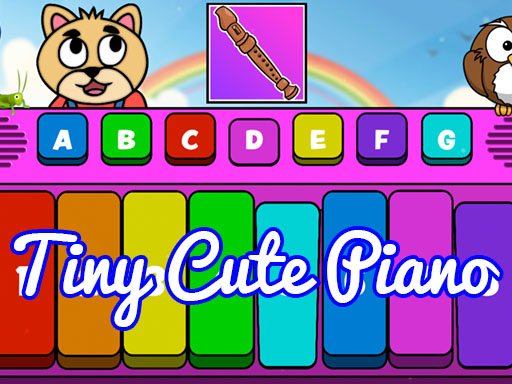
My Little Piano - Kids Music Learning
Review
My Little Piano targets toddlers and preschoolers with a simple premise: tap a colorful key, hear a note, repeat. The absence of timers, scores, and failure states keeps the experience stress-free, and pairing each key with a character or sound effect supports memory. Parents looking for ad-free, independent play will find the design appropriate. The trade-off is depth; older children may outgrow it quickly.
Full story
A Piano Built for Small Hands
My Little Piano presents a colorful keyboard where every key produces a distinct note. Each key is labeled with a bright color and sometimes a small character, giving children visual cues that help them connect what they see with what they hear. The interface is sized for small fingers, so toddlers and preschoolers can tap or click without frustration.
How Young Players Interact
There are no timers, scores, or complex rules. A child taps any key and immediately hears its note, then taps a sequence to create a simple melody. Gentle background music shifts as different keys are explored, reinforcing the link between action and sound. This open-ended design lets children experiment at their own pace, whether they press one key repeatedly or try to string notes together.
Sound and Visual Cues
Each key pairs its note with a friendly character or cheerful sound effect. That pairing gives children a memory hook: the same color, character, and pitch appear together every time, so recognition builds through repetition. The background music adapts to exploration rather than running on a fixed loop, which keeps the audio environment responsive to what the child is doing.
A Safe, Ad-Free Space
The game contains no ads and no inappropriate content, which makes it suitable for independent use by young children. Parents can treat screen time as a productive activity because the focus stays on sound recognition and creative play rather than rewards or pressure.
Getting the Most from Play Sessions
Short, regular sessions work better than long ones for building familiarity. Let a child tap freely without directing them toward a "correct" melody. Singing along with the notes reinforces pitch recognition, and playing together turns the game into a shared activity. Any sequence a child creates is a valid melody, so celebrating simple patterns encourages continued experimentation.
Compatibility
FAQ
Reader Comments
Sign in to comment
You must be logged in before posting a review or rating.
No comments yet. Be the first to comment!



Editorial Notes