
Reviews
Polygon Dash World keeps its scope tight: one tap, one shape, and an increasingly fast path of rotating polygons. The single-input design makes it easy to start, while the gradual speed increase and shifting obstacle patterns give practiced players something to chase. Tokens add a light customization layer through shape skins, and portals mark clear stage progression. The minimal visual style supports readability rather than spectacle. It suits players who enjoy short, repeatable arcade runs built on precise timing.
About this game
One-Tap Jumping
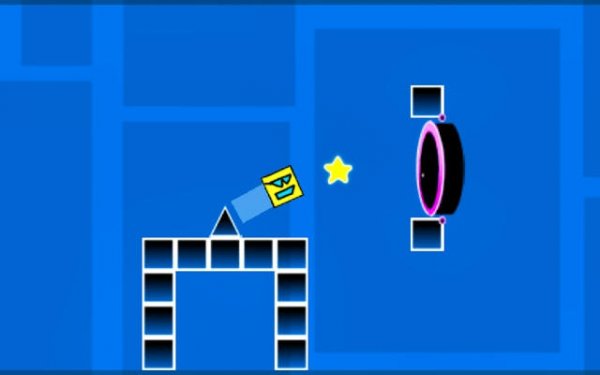
Polygon Dash World builds its entire challenge around a single input. A tap or click makes your shape leap upward, and that one action is the only tool you have for crossing the path. You time each jump to clear the space between platforms and to avoid blocks that appear without warning. As a run continues, the course moves faster and the obstacle arrangements grow more complicated, so the same tap demands sharper timing.
Rotating Polygon Backdrops
The course is assembled from colorful polygons that shift and rotate as you advance. Every major segment introduces a fresh color scheme and a different arrangement of obstacles, which keeps the visual pattern from settling into a single look. The design stays clean and minimal on purpose, so the moving shapes never compete with the action directly ahead of you. Bright backgrounds support that readability rather than distracting from it.
Tokens and Shape Skins
Sparkling tokens are scattered along the route, and collecting them during a run adds to your personal total. Those tokens work as an in-game currency inside the shop, where you trade them for different appearances for your shape. Changing how your character looks is optional, but it adds a layer of personal expression to each session without affecting how the one-button jump behaves.
Portals and Stage Unlocks
At the end of each major section, a glowing gateway appears. Reaching that portal marks the close of the stage and unlocks the next area, which brings altered obstacle patterns and faster movement. This structure gives each run a clear sense of advancement and encourages repeated attempts to see what comes after the next portal. Because difficulty climbs gradually, newcomers can learn the basics while experienced players find a satisfying test in the later stages.
Compatibility
FAQ
Comments
Sign in to leave a review
No comments yet.




Editorial Notes