
Reviews
Spin and Dodge Reflex Challenge keeps its scope tight: one spherical character, two input methods, and a single collision that ends the run. That simplicity works in its favor, because the challenge comes from reading obstacle patterns rather than mastering complex controls. The rotating library of layouts prevents repetition, and the one-to-three-minute rounds suit short sessions. The trade-off is the absence of persistent progression, which means players who need unlocks or long-term goals may find the loop thin. It is best suited to players who enjoy chasing personal bests through repeated, focused attempts.
About this game
Steering a Sphere Through Traffic
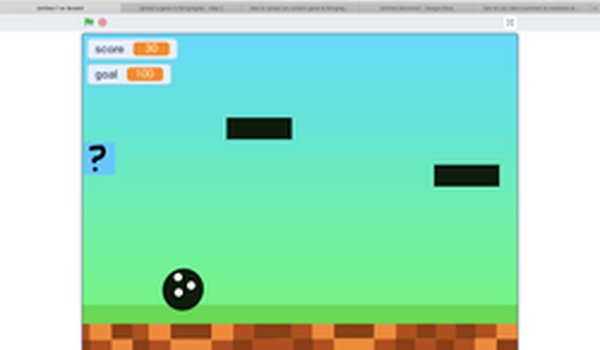
Spin and Dodge Reflex Challenge puts you behind a spherical character rolling across a flat 2D plane. You steer with keyboard arrows or mouse clicks, producing lateral or diagonal shifts. The rolling animation doubles as feedback: you can see exactly how far you have moved and in which direction, which matters when a gap is only slightly wider than your character. There are no combos, meters, or special moves to manage. The control scheme is intentionally minimal so that your attention stays on timing and positioning rather than input sequences.
How Obstacle Patterns Escalate
Obstacles enter from multiple directions and differ in size, speed, and trajectory. Early stages use single stationary blocks, giving you room to learn how the sphere responds. Later sequences introduce moving barriers, narrow corridors, and overlapping paths that force you to choose between two risky gaps. Rather than repeating one layout, the game rotates through a library of pattern types, so each attempt presents a fresh arrangement. The difficulty curve rises gradually, rewarding consistent practice without becoming punishing.
Short Runs, Clear Scoring
Each round lasts roughly one to three minutes, which suits short breaks. Your score tracks distance traveled and obstacles avoided, giving you a concrete number to beat. There are no lives or continues; one collision ends the run. That single-life structure encourages careful play over reckless speed, and it supports the kind of repeated attempts where you try to push slightly further than last time. Because there is no persistent progression, every session starts from the same baseline, so improvement reflects skill rather than accumulated upgrades.
Visual Clarity and Approachability
The game uses a bright, colorful palette with smooth animations. Backgrounds shift subtly between runs, and the character leaves a faint trail that helps you track your movement history. The clean aesthetic reduces visual clutter, keeping incoming hazards readable. Controls and visuals are simple enough for younger players to grasp quickly, while the precision required at higher speeds gives older players something to chase. With almost no text-heavy instructions or complex menus, language barriers are minimal.
Compatibility
FAQ
Comments
Sign in to leave a review
No comments yet.




Editorial Notes