
Snail Bob 8: Island Puzzle
Review
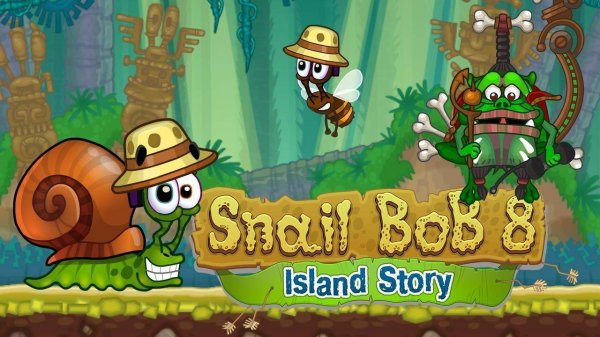
Snail Bob 8: Island Puzzle sticks to what the series does well: simple clicking, environmental logic, and a pace that never pressures the player. The tropical island setting gives each level a bright, consistent look, while the gradual difficulty curve keeps later puzzles from feeling unfair. It is best suited to younger players, families, or anyone who wants a thoughtful casual game without time limits. The main limitation is that the formula stays familiar, so veterans of the series may find few surprises.
Full story
Island Setting and Puzzle Flow
Bob is stranded on a tropical island, and the only way forward is through a sequence of environmental puzzles. Each level places him at a starting point with a glowing exit door somewhere ahead. Between the two lie hazards such as spikes and falling boulders, plus interactive objects that can be manipulated to create a safe path. The island theme carries through every scene with bright, colorful graphics that keep the mood light even when a puzzle requires careful thought.
Clicking Through the Obstacles
Interaction is handled entirely with a mouse or touch input. Clicking a lever might open a gate; pressing a button could activate a bridge; moving a platform can close a gap. The challenge is not reflex speed but observation and sequencing. Players need to notice which objects connect to which outcomes and time their clicks so Bob moves through safely. Because Bob travels slowly, there is room to think between actions, and mistakes rarely feel punishing.
Difficulty Curve and Audience
Later levels build on ideas introduced earlier, gradually combining mechanics rather than introducing sudden spikes. There are no time limits or stressful fail states, which makes the game approachable for younger players, families, or anyone who prefers thoughtful challenges over twitch reactions. The point-and-click format means no complex controls to learn, and the logic-first design rewards patience over speed.
Approaching Each Level
Before clicking anything, scan the scene for moving platforms, buttons, and levers that hint at the correct order of actions. Planning the route to the exit first often prevents unnecessary restarts. If a solution is not obvious, experimenting with every interactive element is a practical way to learn what each one does. Careful observation consistently matters more than fast clicking.
Compatibility
FAQ
Reader Comments
Sign in to comment
You must be logged in before posting a review or rating.
No comments yet. Be the first to comment!




Editorial Notes