
Mystery Chamber Exit Challenge
Review
Mystery Chamber Exit Challenge focuses on self-contained puzzle rooms where connecting visual clues and combining objects matters more than speed. The absence of timers and penalties makes it accessible for families and casual solvers, while gradually increasing complexity gives experienced players something to work toward. The hint system offers gentle nudges without spoiling solutions. Its main limitation is that the input does not describe multiplayer or online features, so it appears to be a single-player experience.
Full story
Puzzle Logic and Observation
Each room in Mystery Chamber Exit Challenge works as a standalone mystery. Progress depends on linking visual clues, combining objects, and recognizing patterns rather than reacting quickly. The game rewards careful examination over speed, so players who linger on details tend to find the next step sooner. Puzzles scale from simple item combinations to multi-step sequences that require creative thinking. Wrong attempts carry no penalty, which makes experimentation a viable solving method rather than a risk.
Distinct Room Themes
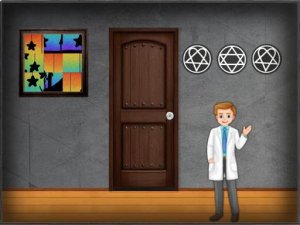
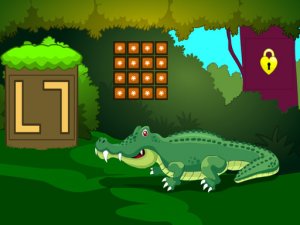
Every level uses its own setting and visual style, from cozy libraries to mysterious attics. The environments are built to feel immersive without overwhelming the player. Colorful graphics and gentle lighting keep each room inviting, while subtle audio cues draw attention to important elements. Because each room has its own puzzle logic, the variety prevents the experience from feeling repetitive. [IMG_1]
Hint System and Controls
Stuck players can use a built-in hint system that offers gentle nudges instead of full solutions. This preserves the challenge while reducing frustration. The interface uses clear icons and responsive touch or click controls. Beginners can learn the mechanics naturally, while experienced solvers can skip hints for a purer challenge.
Progression and Replay
As players advance, puzzles gradually increase in complexity, introducing new interaction types and multi-layered clues. There are no timers or scoring pressure, so each person can solve at their own pace. After completing a room, players can revisit it to find alternative solutions or hidden details they may have missed, which extends the game's longevity.
Compatibility
FAQ
Reader Comments
Sign in to comment
You must be logged in before posting a review or rating.
No comments yet. Be the first to comment!

Editorial Notes